Nzambi Mathia: How a Kenyan Engineer’s Experience Could Transform Ukraine’s Environmental Recovery


At the Glossary Eco Foundation, we are working on proposals for Ukraine’s ecological recovery, including researching global practices in post-disaster recovery. Today, we’d like to share an experience that offers important lessons.
A Kenyan Innovator Who Changed the Game
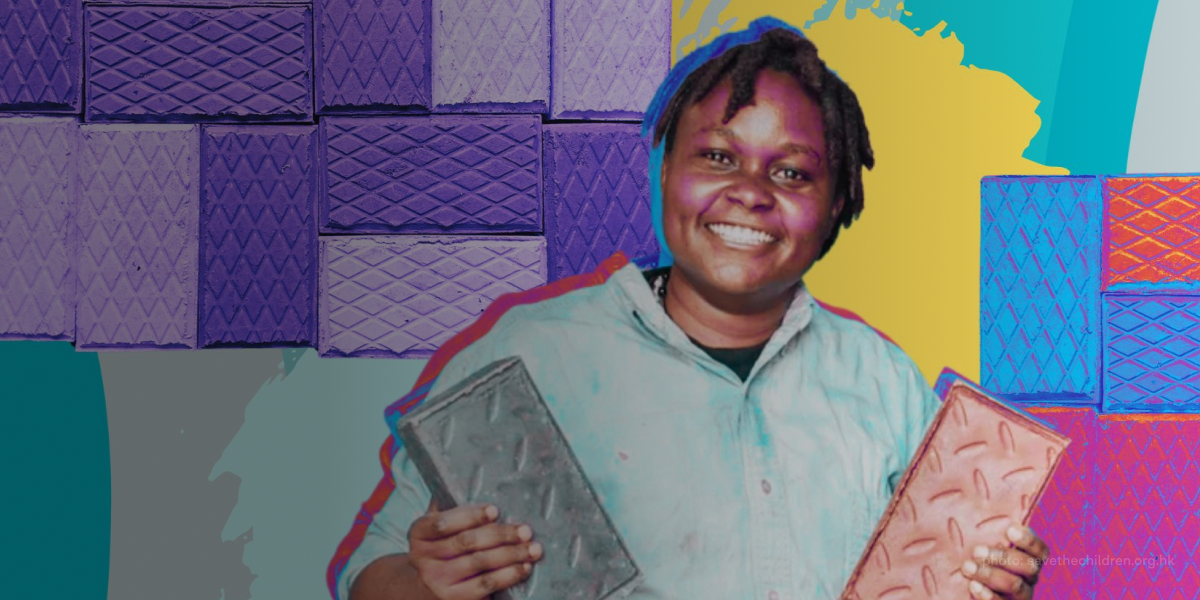
A few years ago, 29-year-old engineer Nzambi Mathi from Nairobi developed a technology that transforms plastic waste into building materials. Her story isn’t just about recycling trash; it’s about how a local crisis can become a catalyst for systemic change. In 2017, Mathiwa left a prestigious job in the oil industry. Seeing mountains of plastic on the streets of Nairobi every day, she decided to take action. A year of experimentation in her parents’ backyard, spending nearly all her personal savings, and complaints from neighbors—that was the price she paid to find a solution.
Today, her company, Gjenge Makers, recycles 500 kilograms of plastic waste every day, producing up to 1,500 building blocks. For this innovation, Mathi received the prestigious UN “Young Champion of the Earth 2020” award.
The manufacturing process is simple:
- Plastic waste is shredded
- It is mixed with sand in specific proportions
- Heated to 350°C
- It is compressed under high pressure
As a result, the blocks are 35% cheaper than concrete ones and can withstand twice the load. But most importantly, they solve two critical problems in Kenya at once: plastic waste and the shortage of affordable building materials.
Why does this work?
Nairobi produces 2,400 metric tons of solid waste every day, 20% of which is plastic. At the same time, the country is in dire need of affordable building materials. The company Gjenge Makers has created an ecosystem: plastic collectors at the landfill have gained a steady buyer and, consequently, a steady income, while schools in the suburban slums now have solid walkways instead of mud.
Lessons for Ukraine’s Reconstruction
When looking at such examples, experts sometimes suggest, “Let’s do the same here.” But let’s take a closer look. What can we actually adapt?
1. First and foremost—systems thinking.
After all, Matija doesn’t just recycle plastic—she’s launched a microbusiness, and in doing so, she’s creating jobs, solving infrastructure problems, and changing attitudes toward waste. For Ukraine, this means that every reconstruction project can take into account its environmental, economic, and social impacts.
2. Innovation arises from constraints
: The Kenyan experience shows that a lack of resources can stimulate creativity. Ukrainian communities, especially those affected by the war, can become testing grounds for new solutions.
But the reality is more complex. Let’s be honest—directly replicating this exact project in Ukraine will face challenges
:
- EU environmental standards require control of emissions from plastic heating
- A developed market for building materials offers high-quality alternatives
- The cost of equipment (30–50 thousand dollars) without donor support may be prohibitive for an individual entrepreneur
- Consumer acceptance requires testing to see if Ukrainians are ready to build with “recycled waste.”
What does this mean for us?
Instead of copying technologies, we should adopt approaches:
- Seeing a resource in a problem: our destroyed buildings are not just trash, but potential building materials
- Engage communities: local residents know their needs best
- Think systemically: combine environmental, economic, and social considerations
- Adapt, don’t copy: take an idea and reimagine it for our reality
Perhaps the following would be more relevant for our communities:
- Producing eco-friendly insulation from local raw materials
- Mini water purification systems
- Mobile hazardous waste treatment facilities
As the experiences of Vietnam, Rwanda, Iraq, and Japan (which we’ve written about previously) show, the most successful recovery projects are those that take the local context into account. Kenya’s “plastic bricks” are not a one-size-fits-all solution, but rather inspiration for finding our own path.
The Glossary Eco Foundation continues to research global practices in ecological restoration, so we invite you to join the conversation.
Support Glossary Eco Foundation so we can continue educational and eco-friendly projects that make real difference
Donate