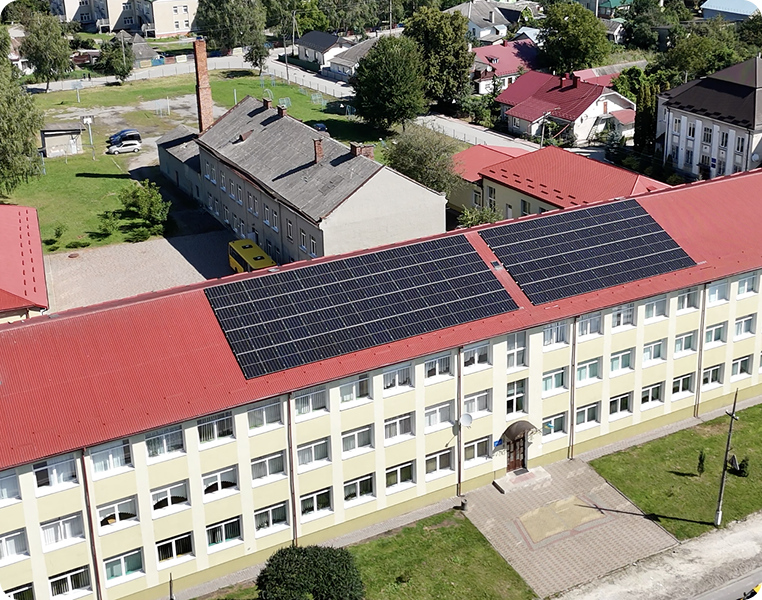
Pilot project of the School Under the Sun program
General Secondary School of the Town of Monastyryska
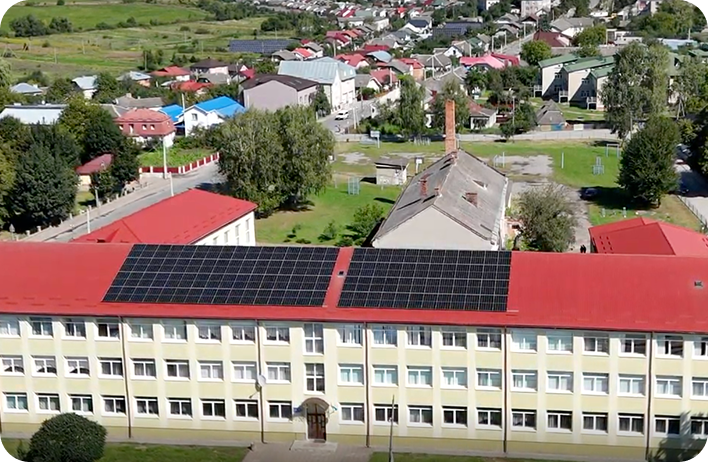
Ternopil oblast. A hybrid solar power plant with a capacity of 51.5 kW ensures a stable learning process for 638 pupils, independent of the state of the external grid.
Key Figures
Before the Project
Like most Ukrainian schools, the school in the town of Monastyryska depended entirely on the centralised grid. At the peak months, outages lasted 8-10 hours a day. The learning process came to a halt, lighting and computer equipment switched off, and the operation of the canteen and the shelter was interrupted.
What Was Installed
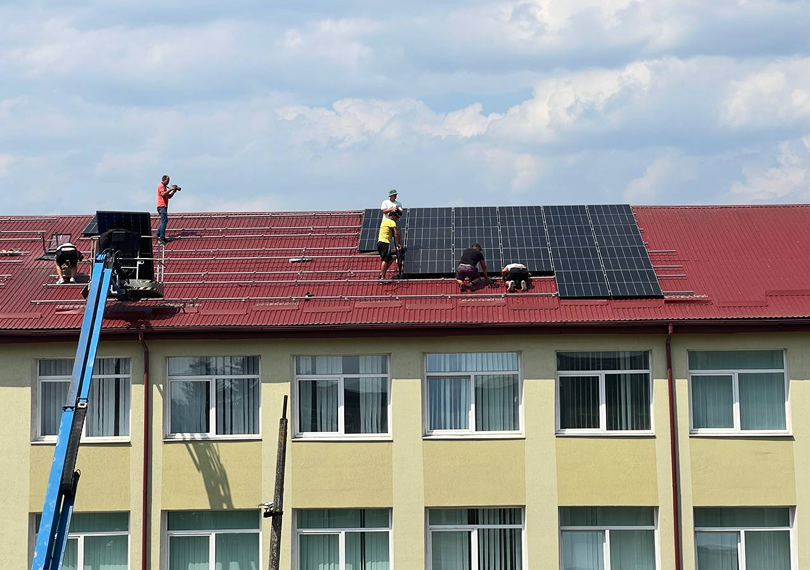
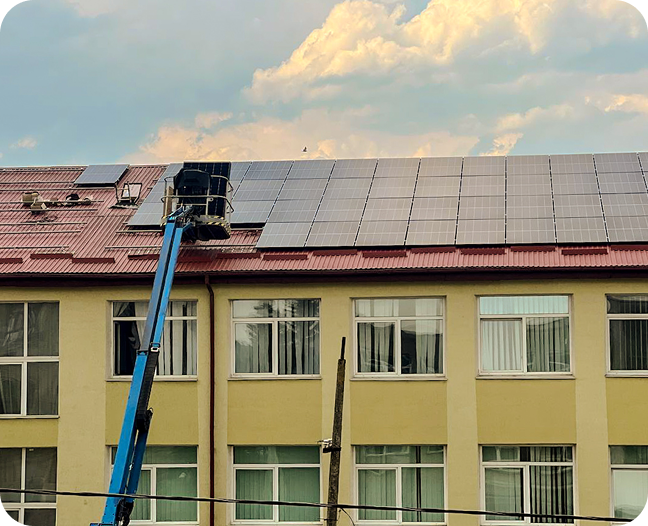
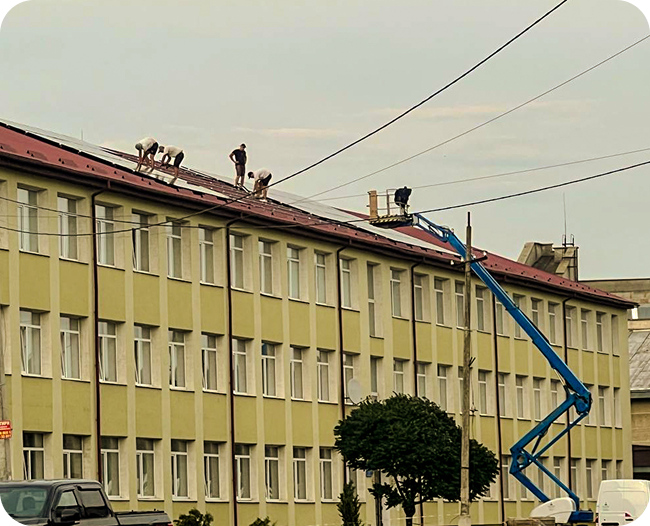
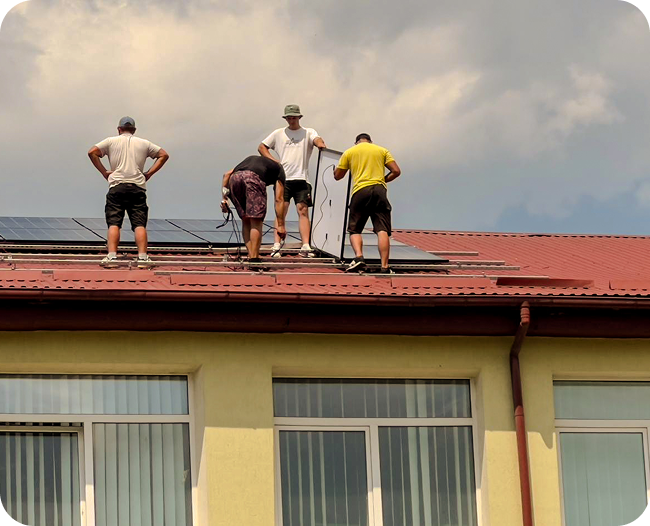
A hybrid solar power plant with an energy storage system was mounted on the roof of the school. The system operates in three modes: it powers the school from the sun during the daytime, charges the batteries for operation in the evening or during outages, and connects to the general grid when own generation is insufficient. Switching between modes happens automatically, without staff intervention and without interruption of the power supply.
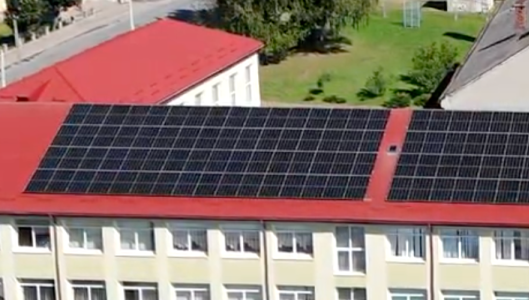
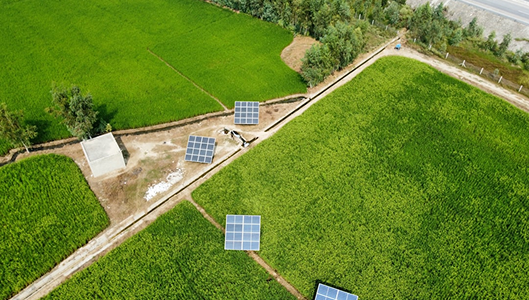
51.5 kW solar power plant
112 monocrystalline Leapton Solar panels provide electricity generation for the school's needs.
Deye 50 kW hybrid inverter
The inverter manages the operation of the panels, batteries and external grid.
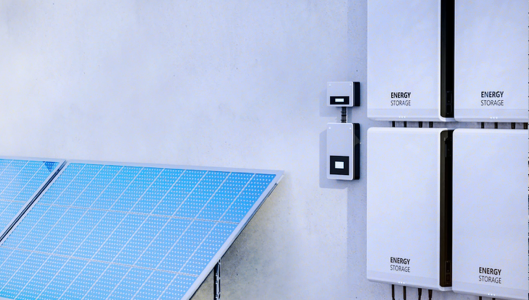
20.5 kWh storage system
The battery unit supports autonomous operation of the school’s critical areas.
What Changed
Since launch, the school has received more stable power supply and reduced dependence on the external grid. Students and teachers can continue classes during outages, while the community saves on electricity costs every year.
How the Savings Work
A state school is publicly funded, and savings on utility payments work differently here than in the private sector. Each year, the community budget sets aside funds for the school's electricity payments. Now these expenditures are reduced by more than UAH 185,000. The funds freed up remain in the local budget, and the community council can direct them to repairs, equipment or other needs of the school. For donors and partners of the programme, this means: each installed plant not only delivers autonomy, it frees up a steady resource for the community's development - year after year, throughout the entire operating life of the solar plant.
Technical System Specifications
| Parameter | Value |
|---|---|
| School address | Town of Monastyryska, Ternopil oblast |
| Hybrid | Solar generation + batteries + grid connection |
| Solar panels | Leapton Solar LP182M60-MH-460W |
| Panel technology | Monocrystalline silicon, Tier 1 class |
| Number of panels | 112 units |
| Single panel capacity | 460 W |
| Total installed capacity | 51.5 kW |
| Inverter | Deye SUN-50K |
| Inverter power | 50 kW, three-phase, hybrid |
| Storage system capacity | 20.5 kWh |
| Autonomous operation time | up to 4 hours (base teaching load) / up to 6 hours (lighting and communications) |
| Estimated generation | around 37,000-40,000 kWh |
| CO₂ reduction | 15 tonnes per year / 375 tonnes over 25 years |
| Battery modules | 4 × Deye SE-G5.1Pro-B |
| Battery technology | LiFePO4 |
| Capacity of a single module | 51.2 V / 100 Ah |
| Launch date | 17 November 2025 |
| Project cost | USD 42,000 |
| Online monitoring | in real time |
| Annual savings | over UAH 185,000 |
| System service life | 25 years |
Project Timeline
Preliminary energy audit of the school. Preparation of the hybrid solar station concept.
System design. Coordination of technical solutions with contractors.
Equipment preparation.
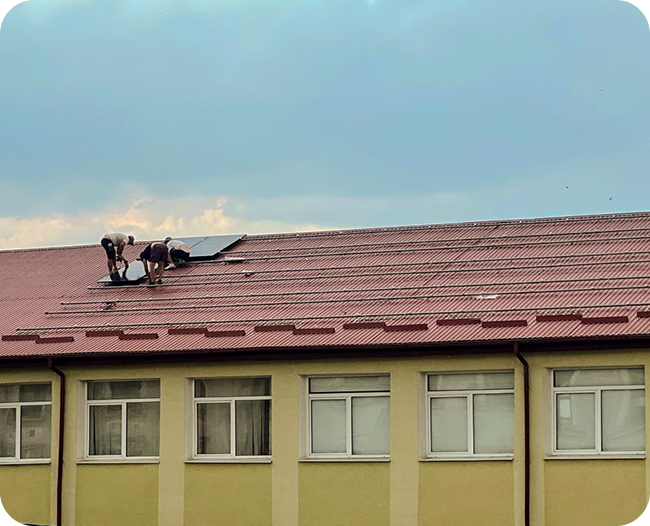
Installation work. Connection of the inverter and storage system.
Official launch of the station.
Project Photos
Monastyryska - a beginning, not a conclusion
The pilot project showed that the model works, scales and can be applied in other Ukrainian schools.
Support the Next School