How Small Businesses Can Find Funding for Environmental Projects
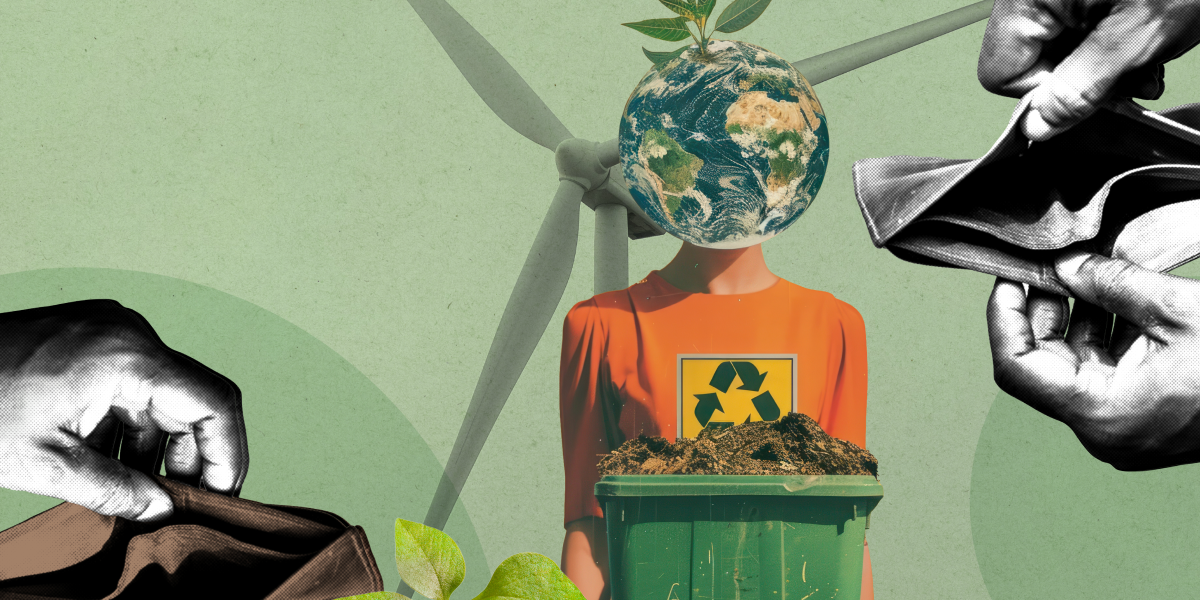


Many foundations and companies are trying to support environmental initiatives. But without the involvement of the government and big business, their impact is limited. The paradox is that there is enough money in the world for “green” solutions. The global market for sustainable finance already exceeds $30 trillion, of which $789 billion is earmarked specifically for small and medium-sized enterprises (SMEs). Yet over the past three years, only 2.8% of companies have taken advantage of this opportunity.
Why is that?
A McKinsey study (2024) shows that businesses that combine profitability with sustainable practices are twice as likely to grow by more than 10% than those focused solely on profit.
Examples of successful SMEs:
Benders (United Kingdom)—installed variable-frequency drives for fans. Investment: < $10,000; payback period: less than 6 months.
InnovaFeed (France)—produces animal feed from larvae using agricultural processing waste. The raw materials are practically free.
Schneider Electric (France)—installed a baler for thread waste. Now, waste generates revenue and covers part of the cost of raw materials.
Why the timing is right:
73% of banks and funds already offer green financing for SMEs.
Companies that have received it are 2.5 times more likely to implement eco-projects.
89% of businesses consider this funding critically important for sustainable development.
Examples from other countries:
South Africa—issuance of green bonds for solar and wind energy.
Brazil—a combination of public-private programs for nature conservation.
India—microcredits based on the Grameen Bank model have helped thousands of SMEs.
California (U.S.)—funding energy-efficient solutions through a property tax.
Barriers for SMEs:
74% complain about complex reporting requirements.
68% cite the high cost of eco-projects.
67% cite a lack of time.
But there is a solution: companies that begin reporting on their environmental impact are significantly more likely to receive funding. However, only 1.2% of SMEs currently do so.
What can help:
- simpler reporting standards designed specifically for small businesses;
- digital tools for automatically calculating emissions and generating reports;
- tax incentives, grants, and affordable loans.
Why this matters:
SMEs account for over 90% of the world’s businesses and are responsible for more than half of global non-household emissions. They have the potential to drive the transition to net-zero emissions by introducing innovations and creating a real positive impact.
For Ukraine, this also presents an opportunity to integrate into the European market. Eco-practices are becoming not just a “green image,” but a real prerequisite for entering international markets and attracting investment.
We would also like to announce an interesting and important event—on October 16, 2025, Kyiv will host the international conference “Responsible Business for Ukraine’s Recovery: The Path to Sustainable Investment and European Integration,” organized by the Ministry of Economy, Environment, and Agriculture of Ukraine in partnership with UNDP. The conference will discuss responsible business conduct as the foundation of Ukraine’s economic strategy, as well as financial instruments.
Share in the comments: Which green financing instruments are of most interest to your business?
Support Glossary Eco Foundation so we can continue educational and eco-friendly projects that make real difference
Donate